
New drives and resurfacing
Tarmac Driveways Rotherham
New tarmac and asphalt driveways and resurfacing across Rotherham, laid quickly and covered by our 10-year workmanship guarantee.
- 5.0 Google rated
- Fully insured
- Local Rotherham team
- Free, no-obligation quotes
- Quick to lay A shorter turnaround than concrete
- Colour options Red, green, beige and blue as well as black
- Resurfacing An affordable refresh for a worn tarmac drive
A popular choice
Tarmac Driveways in Rotherham
Tarmac, or asphalt, driveways are still a common sight across the UK, and for many years they were one of the most popular driveway choices. Thirty-five to forty-five years ago it was standard practice to finish driveways on new-build estates in tarmac: developers were already surfacing the main roads, so it made sense to extend the same finish onto each property’s driveway. That is why so many tarmac driveways are still around today.
Tarmac remains a popular finish for upgrading from an existing grass, gravel or partly paved drive, or for resurfacing an existing tarmac driveway that has started to show its age after years of use.
Tarmac or asphalt?
Tarmac and Asphalt Driveways
Back in the 1960s and 70s, almost every tarmac drive you saw would have been black, but there are many more colour options now. Over the last ten years it has become common for new and resurfaced driveways to use bolder colours such as red, green, beige, blue and salmon. The two names are often swapped, but there are differences between them.
Tarmac (tarmacadam)
Made by coating crushed stone completely in tar. Once it has been poured, it is spread out, then compacted and rolled to give a smooth surface finish.
Harder-wearing
Asphalt
The more modern version: instead of tar, bitumen, a by-product of oil refining, is mixed with the crushed stone. It looks very similar to tarmac, but asphalt is a little more durable and gives a slightly smoother surface.
Tarmac is also more at risk of breaking up from petrol or diesel spills, whereas asphalt is a harder-wearing surface and needs less maintenance over its lifetime.
Why tarmac?
Why Choose a Tarmac Driveway?
Tarmac driveways can be laid relatively quickly, particularly compared with concrete, which takes longer to cure and costs a little more. The shorter turnaround helps keep costs down, because less labour is needed to finish the job, and it means less time finding somewhere else to park your car or van.
Black has always been the main colour, but if a black drive is the only thing putting you off tarmac, it needn’t be any more. With today’s options you can have a smart tarmac drive in a colour your neighbours will envy. Finished neatly with block paving edging, you get a great-looking driveway, laid quickly at a really good price.
Costs
Tarmac Driveway Cost
Resurfacing
Around £50
per m², depending on the area covered — often less than half the cost of a new driveway that needs groundwork
The cost of a new tarmac driveway depends on its size, slope and the existing ground conditions.
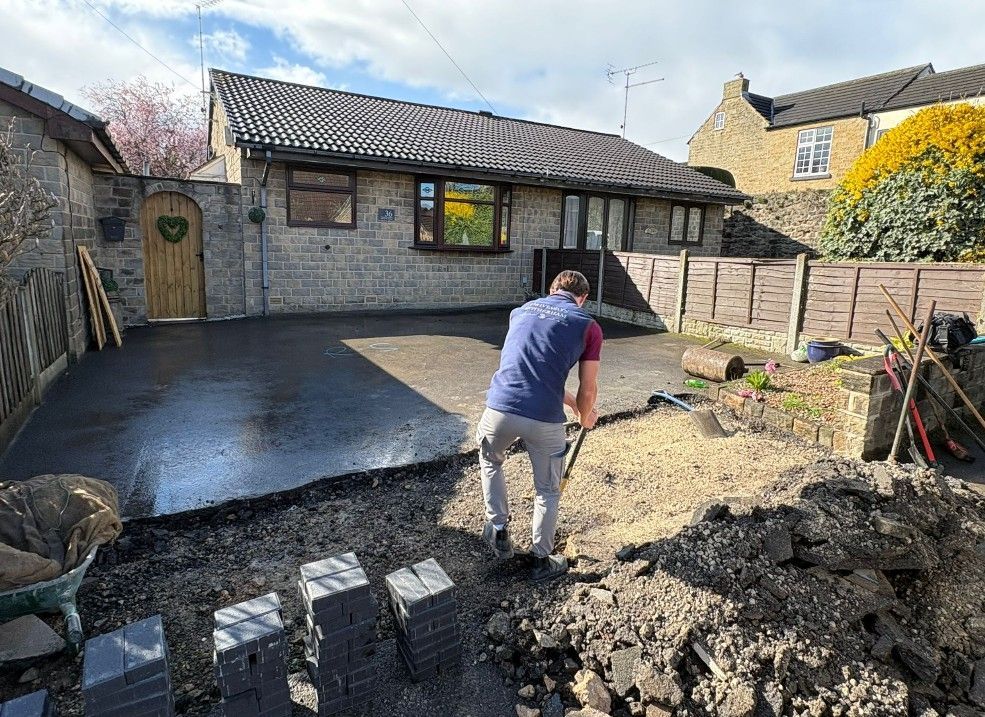
Tarmac is also a good option if you already have a driveway, because it gives you the chance to resurface it. That is especially true of an existing tarmac drive that has become patchy over the years, with loose stones everywhere: resurfacing can be a very economical choice. Whether for a home or a commercial property, we can give competitive quotes for repairs, resurfacing or a complete new driveway. Your quote will depend on:
- The size of the driveway
- The slope of the ground
- The condition of the existing surface
- Edging and borders
Recent work
Tarmac Driveway in Brinsworth
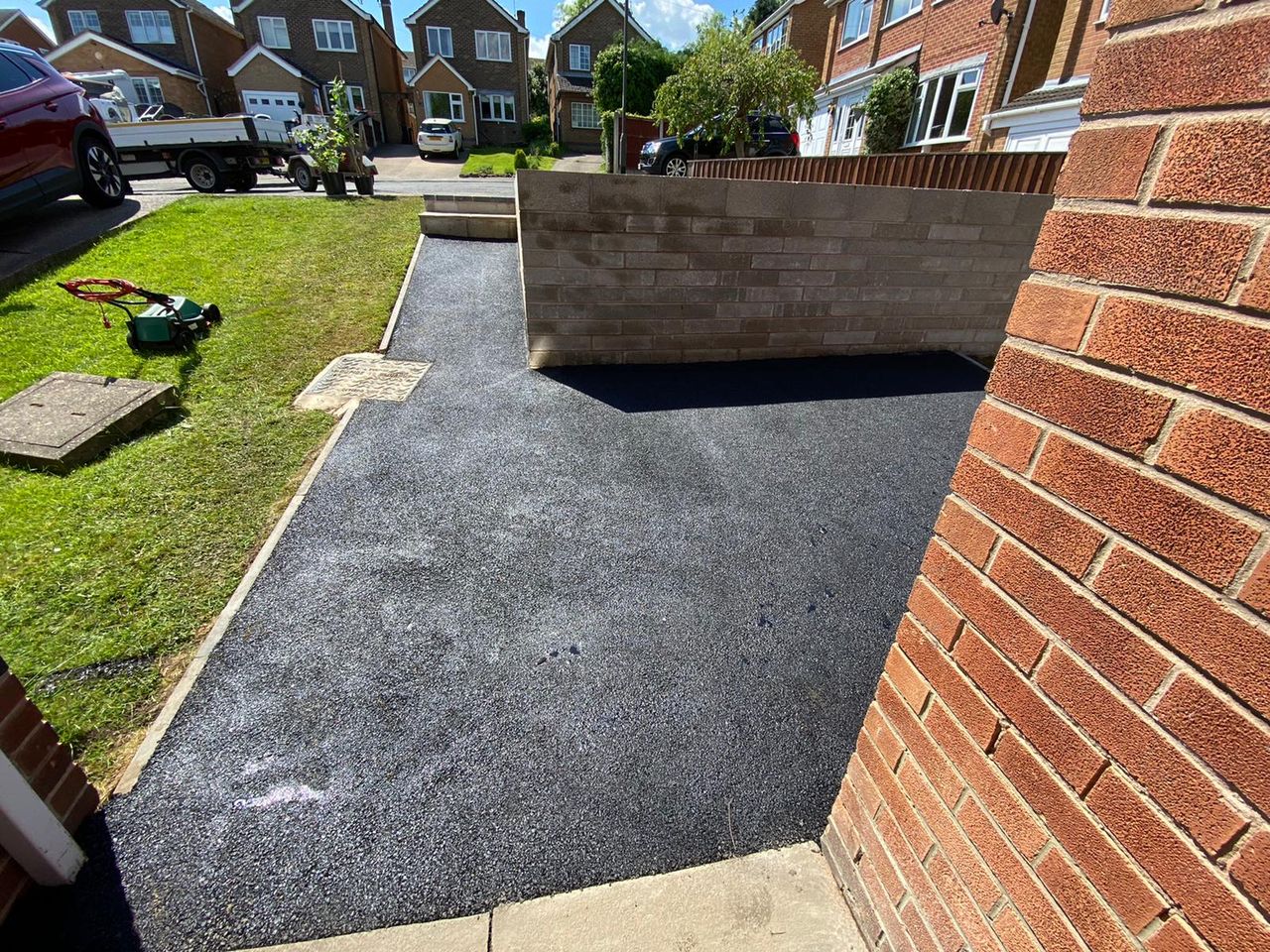
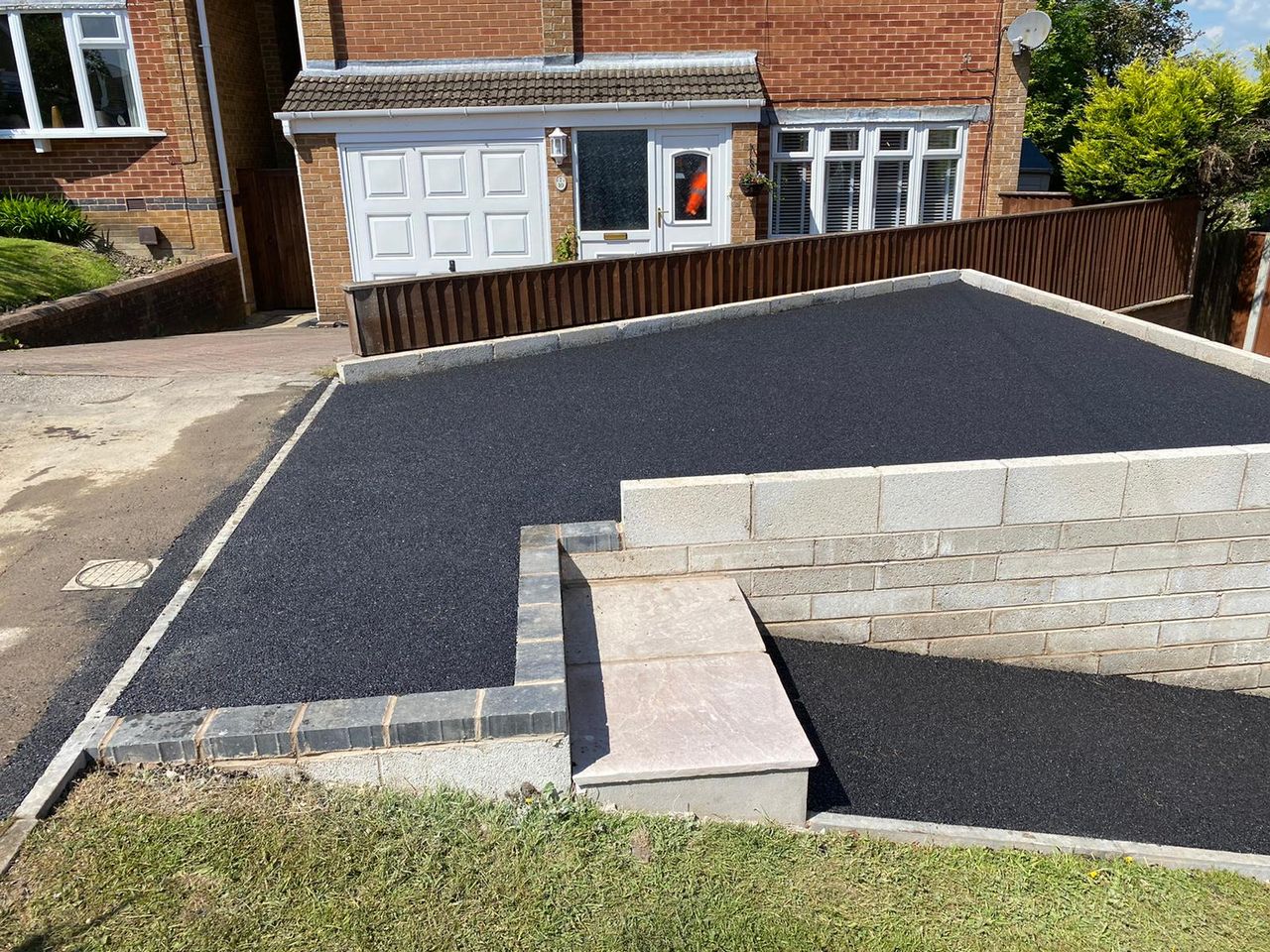
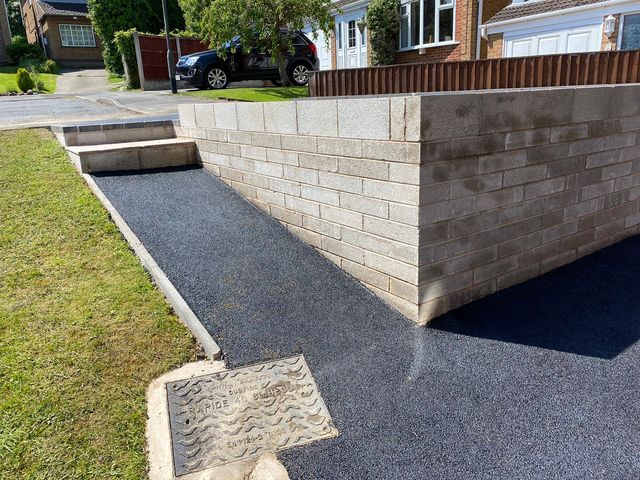
A tarmac driveway and path we laid on a sloping site in Brinsworth, Rotherham, alongside a retaining wall.
-
 Side path
The tarmac path running down the side of the drive
-
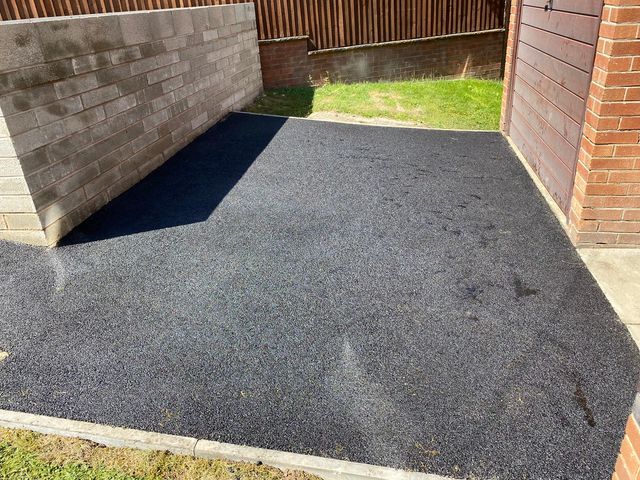 Finished surface
Clean, smooth and ready for daily use
-
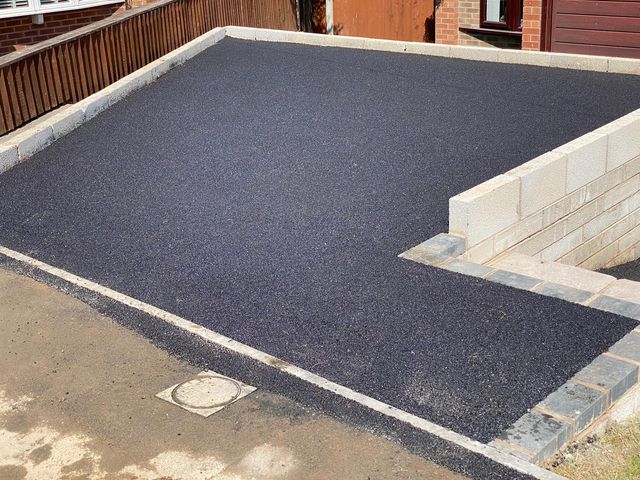 Driveway
The new driveway built into the slope
-
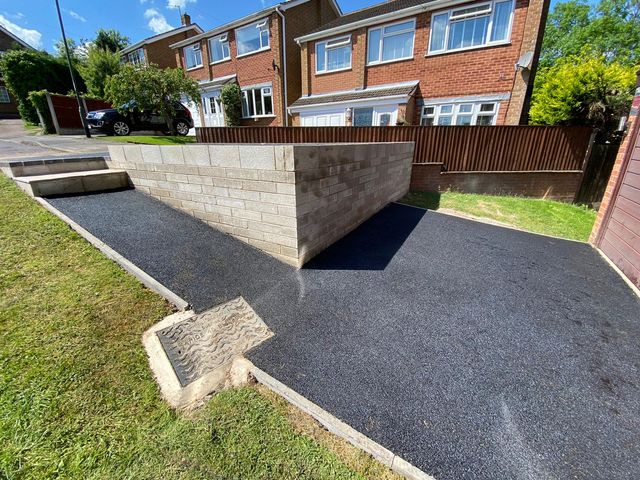 Completed
Driveway and path finished together
Maintenance
Tarmac Driveway Maintenance
To keep your tarmac or asphalt driveway looking and performing its best, give it a good clean at least a couple of times a year. Use a stiff broom, or one with metal bristles, to lift leaves, seeds and debris. A pressure wash suits a tarmac drive, and pre-treating with a mild detergent gives better results, but stay away from harsh chemicals.
If you notice any cracks or small gaps while cleaning, repair them as soon as possible so they don’t grow. Ideally, seal-coat your tarmac driveway every two to four years to keep it looking good and improve its water resistance. That cuts down the water sitting in and around the surface, which in winter means less ice forming, expanding and causing cracks. Looked after properly, you can expect a tarmac driveway to last around 15 to 20 years.
Other surfaces
Compare Other Driveway Options
Comparing finishes? We’re happy to quote for more than one so you can see the difference.
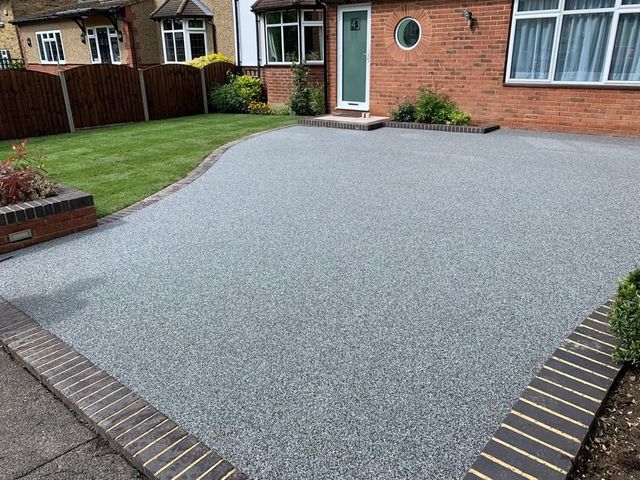
Resin Driveways
Costs more, but lets rainwater drain straight through.
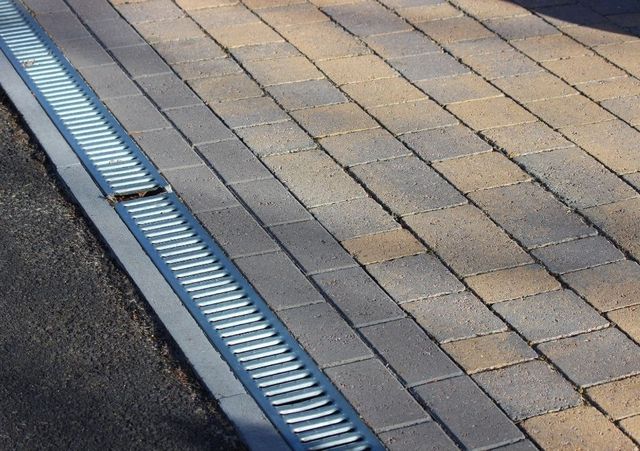
Block Paving
Pairs well with tarmac as a neat edging or border.
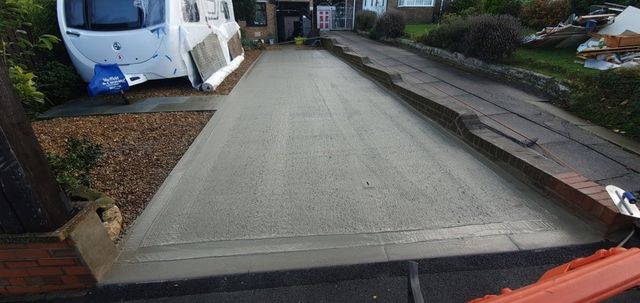
Concrete Driveways
Slower to cure, but built for the heaviest use.
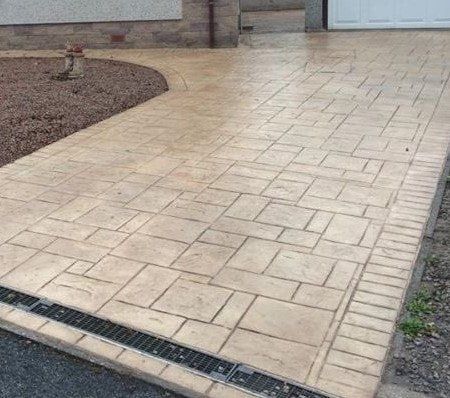
Imprinted Concrete
Pattern and colour with a high-sheen sealed finish.
Where we work
Tarmac Driveways Across Rotherham
We lay and resurface tarmac driveways across Rotherham and the surrounding towns, including:
- Tarmac driveways in Brinsworth
- Tarmac driveways in Dinnington
- Tarmac driveways in Maltby
- Tarmac driveways in Mexborough
- Tarmac driveways in Rawmarsh
- Tarmac driveways in Swallownest
- Tarmac driveways in Swinton
- Tarmac driveways in Thorpe Hesley
- Tarmac driveways in Thurcroft
- Tarmac driveways in Treeton
- Tarmac driveways in Wath upon Dearne
- Tarmac driveways in Wickersley
Free quotes
Get a Free Tarmac Driveway Quote
Whether it’s a new drive or a resurface, call us or send a photo through our quote form for a provisional price.
FAQs
Tarmac and Asphalt Questions
Do you recommend tarmac driveways?
We prefer to give you the facts rather than steer you towards one surface. Cost is usually the biggest consideration, and sometimes the drive someone first asks for isn’t the one that best fits how they use it. Tarmac is ideal if you want a smart, practical drive laid quickly at a good price, or an affordable way to bring a worn one back to life. We’ll talk through how you use your drive and give you a straight comparison.
Is tarmac a permeable driveway?
No. Tarmac is a sealed surface, so rainwater runs across it rather than soaking through. Councils prefer driveways that don’t send water down the road into drains, which can block and cause local flooding, so a tarmac drive may need a drainage channel or soakaway to catch the run-off, and that can add to the cost of installation.
Is tarmac a low-maintenance driveway?
Yes. Along with resin and patterned concrete, tarmac is one of the easiest driveways to keep clean. After a year or two you will notice some dirt and algae, especially near trees, lawns or flower beds, but a sweep and an occasional pressure wash keep it in good order, and seal-coating every two to four years helps protect it.
Can tarmac be laid over an existing driveway?
Often, yes. If you already have a tarmac drive in reasonable condition, resurfacing over it can be very economical. If the base underneath has failed or was never properly laid, we dig down to the right level and put in a new base first, just as we would for a brand-new drive. We’ll inspect it and tell you which applies.
Can you combine tarmac and block paving?
Yes, we can. We will agree the design before work starts, so we know the exact position of the block paving in relation to the tarmac. Block paving is often used as the edging to a tarmac driveway, but it can also be laid through it to make a more interesting design.
What are the main differences between resin and tarmac driveways?
A resin driveway will typically cost more than tarmac, and a resin bound surface is permeable, letting rainwater drain through, whereas tarmac is not. Tarmac is quicker and more affordable to lay, and resurfacing an existing tarmac drive is one of the most economical ways to refresh a driveway.
